

Regulations for fireplaces and stoves in Switzerland
Anyone installing a fireplace or stove in Switzerland is working within a clear set of rules covering fire protection, air pollution control and cantonal requirements. That sounds like a lot, but it is no obstacle if the planning is right from the start. That is exactly our job. glutform knows the applicable regulations from daily practice and ensures that your system is planned, installed and approved in compliance with the standards. On this page you will find a clear overview of the most important regulations for fireplaces and stoves in Switzerland, from the VKF fire protection regulations and combustion air to the combustion inspection. This way you know what matters and can concentrate on the beautiful part: the fire.
AS OF: JUNE 2026
Chimney height above the roof
In recent years the requirements have become stricter. According to the recommendations of the FOEN (Federal Office for the Environment) on the minimum height of chimneys above the roof, higher minimum dimensions apply today. The former, lower heights are only approved by the building authorities in exceptional cases.
As a guide for small wood-burning appliances such as fireplaces and stoves:
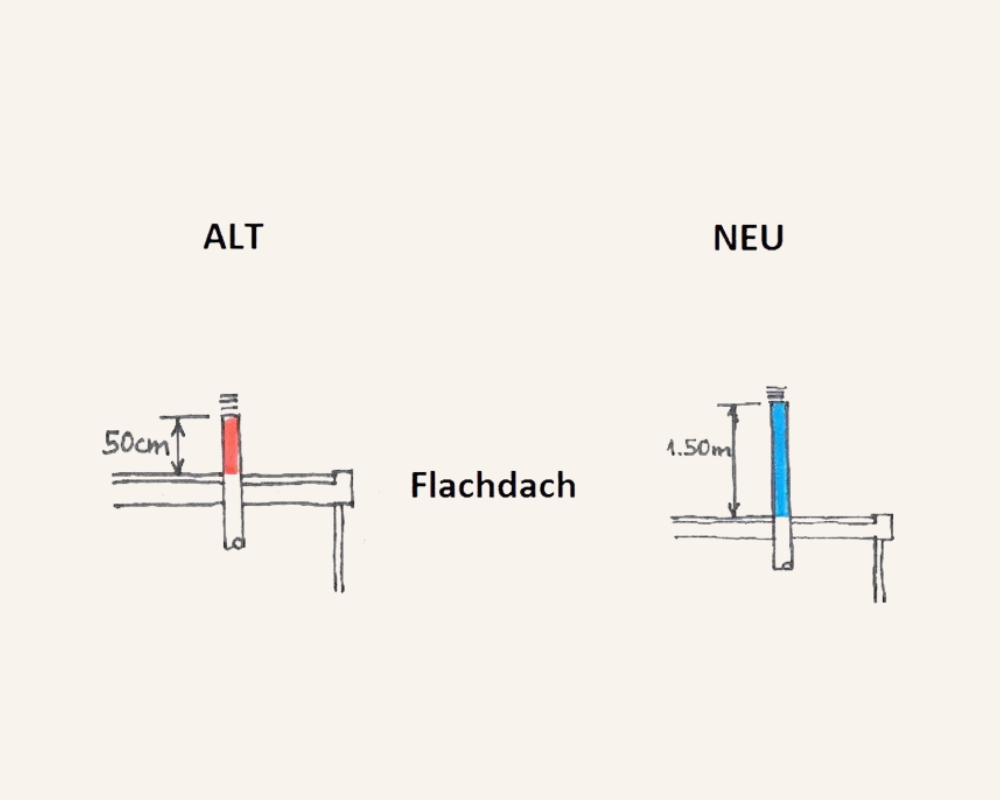
Flat roof:
The chimney outlet must be at least 1.5 metres above the roof surface.
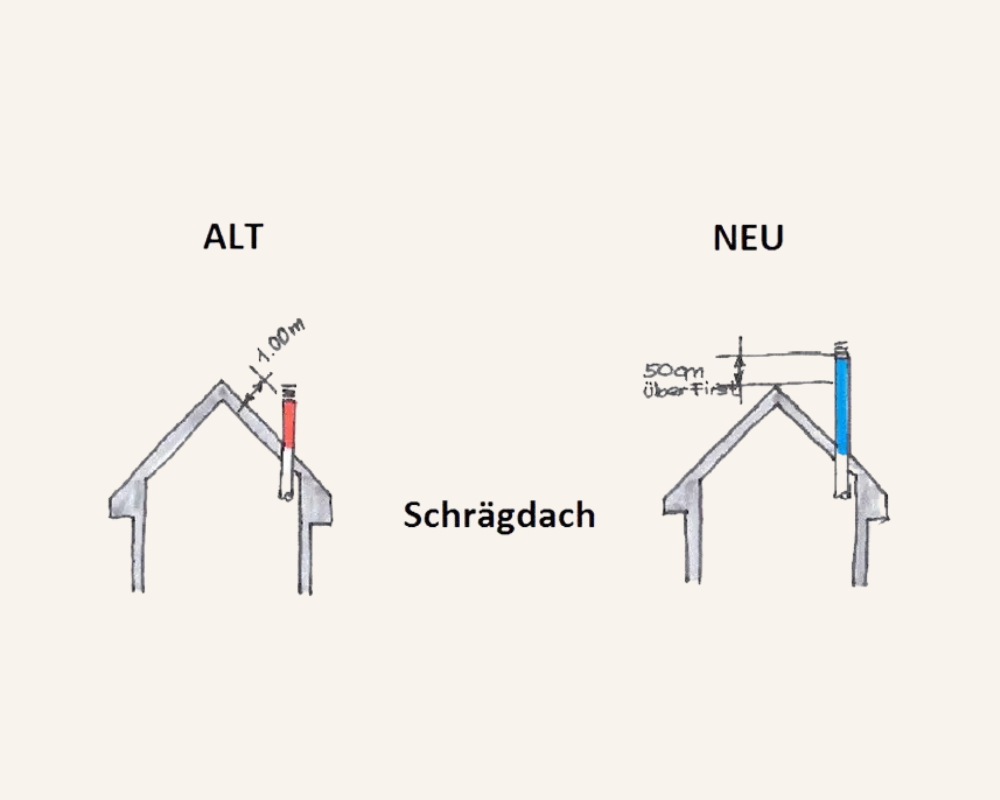
Pitched roof:
The chimney outlet must be at least 0.5 metres above the ridge.
These are minimum values. The height actually required depends on the individual case, for example on taller neighbouring buildings nearby, on roof structures or on the shape of the roof. The stricter of the fire protection and air hygiene requirements always applies. We check this for your project and plan the chimney to be approvable from the start.
MOST COMMON PLANNING MISTAKE
Combustion air
The most common planning mistake is a missing or undersized fresh air supply. Every fireplace and every fireplace stove absolutely needs sufficient fresh air, and in new builds a direct fresh air connection is required by law. Without it, malfunctions occur immediately given today's airtight construction methods.
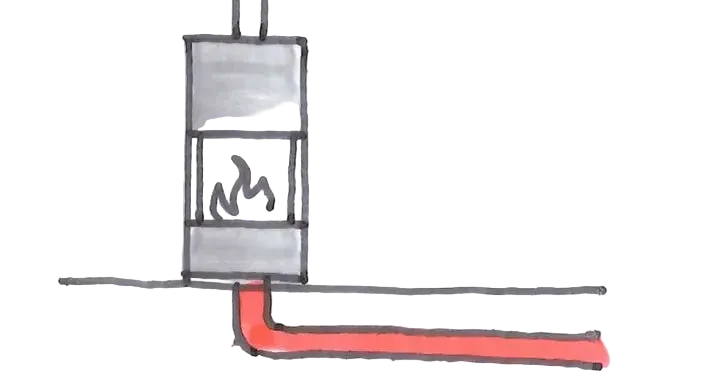
Stoves need fresh air too
Contrary to a widespread belief, a fireplace stove or wood-burning stove also absolutely needs a fresh air supply, especially in modern, airtight buildings.
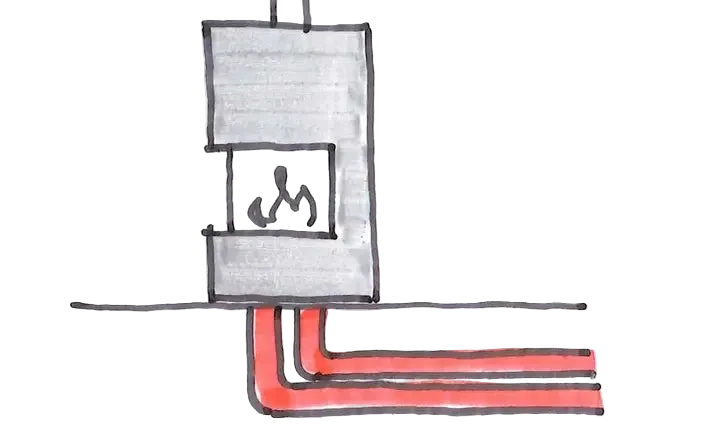
Fresh air cross-sections for fireplaces (guide values)
Depending on the size of the fireplace and the chimney cross-section, the following cross-sections apply:
Wood-burning stove: 1 × Ø 100 mm or 78.5 cm²
Small fireplace: 1 × Ø 150 mm or 175 cm²
Medium fireplace: 2 × Ø 150 mm or 350 cm²
Large fireplace: 3 × Ø 150 mm or 525 cm²
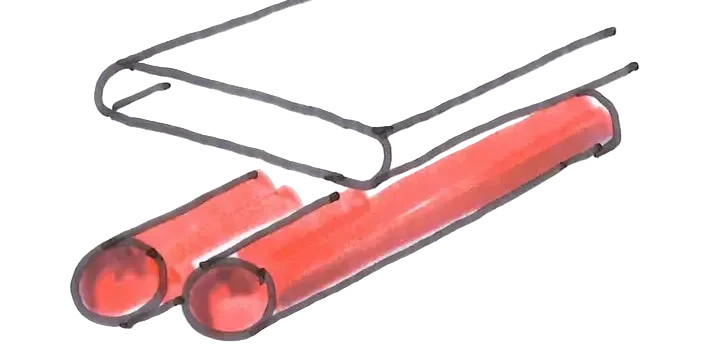
Pipes, ducts and insulation
The fresh air can be routed to the fireplace or stove in round pipes or in flat ducts, and what matters is the right cross-section.
Fresh air ducts normally need to be insulated.
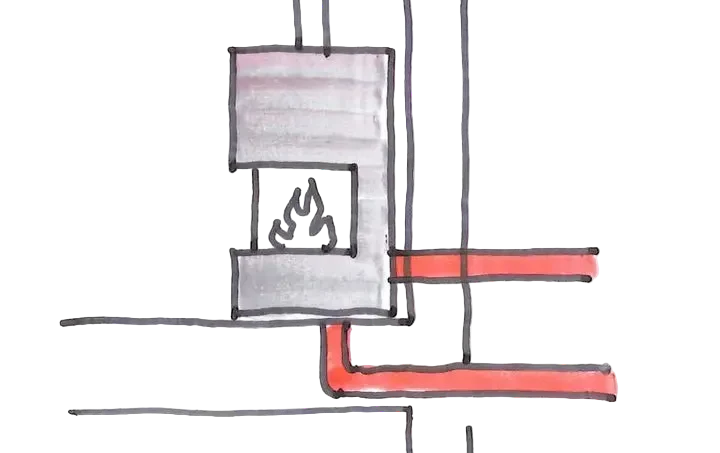
Duct routing
The supply is routed via the floor (concrete slab) or directly through the external wall to the fireplace.
Routing fresh air from the roof is only possible in exceptional cases.
AS OF: JUNE 2026
Fire protection
Every fireplace needs reliable fire protection so that surrounding building components do not overheat. How much thermal insulation and which clearances to combustibles are required depends on the appliance and is stated bindingly in the product's declaration of performance. We plan according to the currently applicable VKF fire protection regulations and the technical rules of feusuisse.
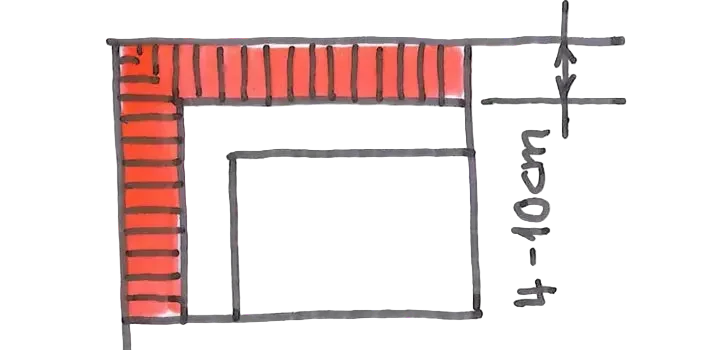
Non-combustible walls
Thermal insulation according to the manufacturer's specifications, around 4 to 10 cm depending on the model.
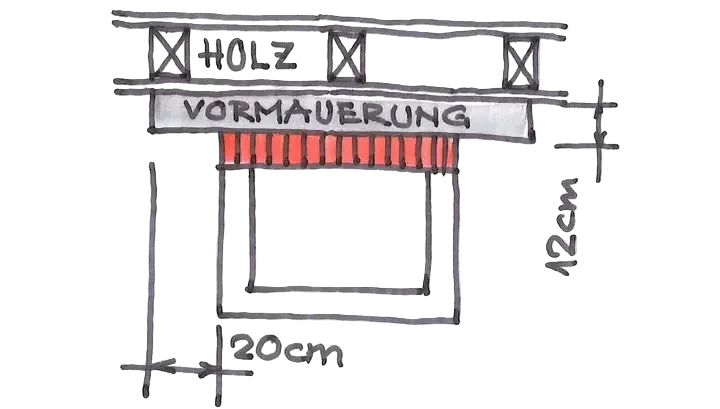
Combustible walls (e.g. wood)
Facing wall in front of combustible walls with a minimum thickness of 12 cm, over the entire room height.
Facing wall projecting 20 cm beyond the fireplace at the sides.
Thermal insulation according to the manufacturer's specifications, around 4 to 12 cm depending on the model.
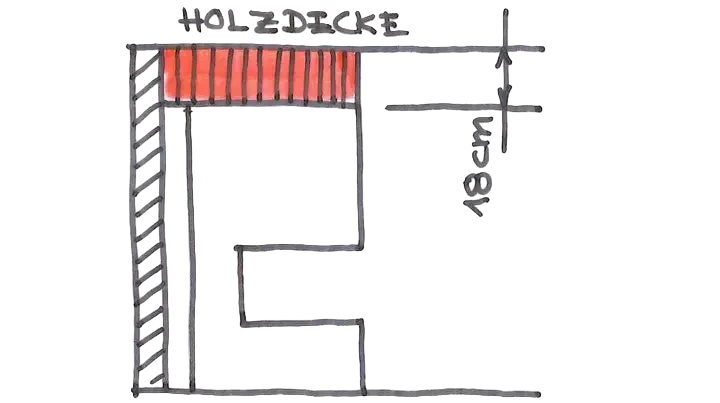
Combustible ceilings
Combustible ceilings (timber construction) must be sufficiently insulated, around 18 cm depending on the build-up.
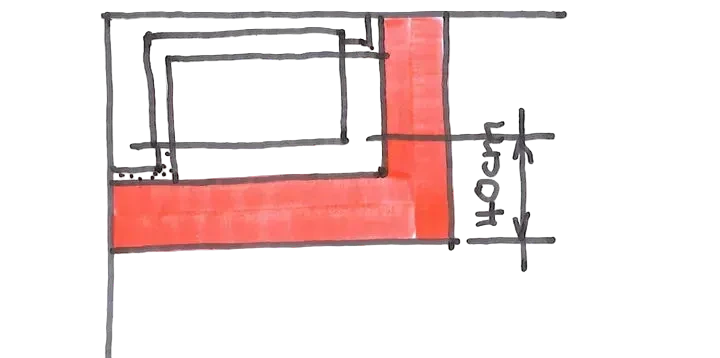
Hearth plate for fireplaces
Combustible floor coverings in front of the fireplace must be protected with a non-combustible material (RF1).
The hearth plate must be at least 40 cm wide, measured from the edge of the firebox.
If the firebox is more than 40 cm above the floor, the width of the hearth plate corresponds to the height.
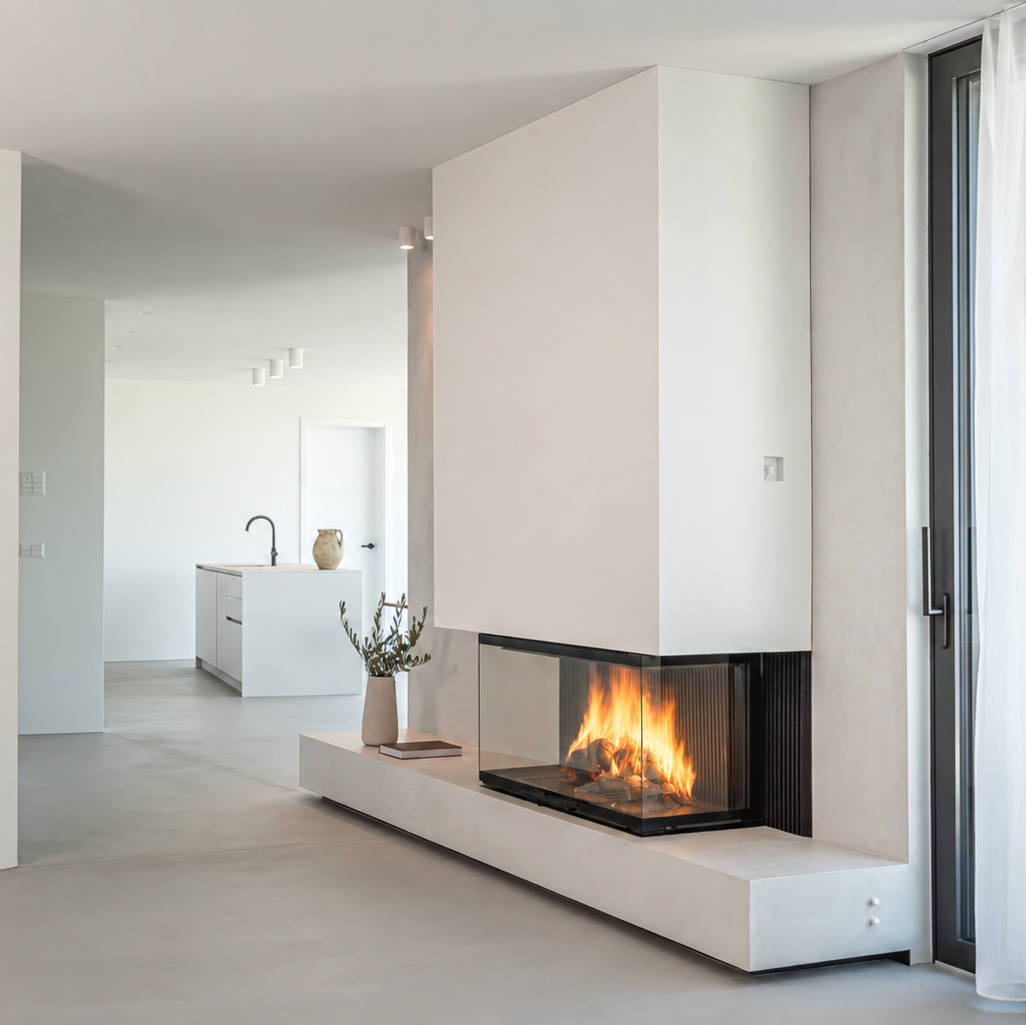
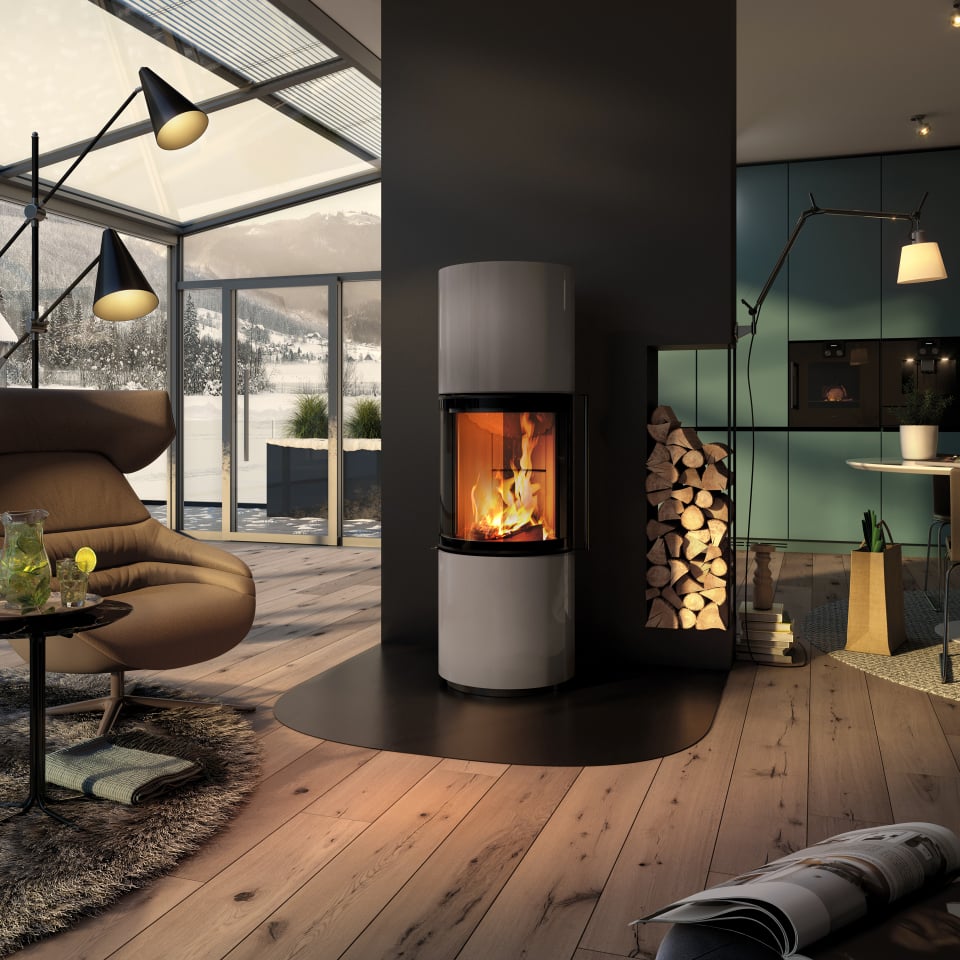
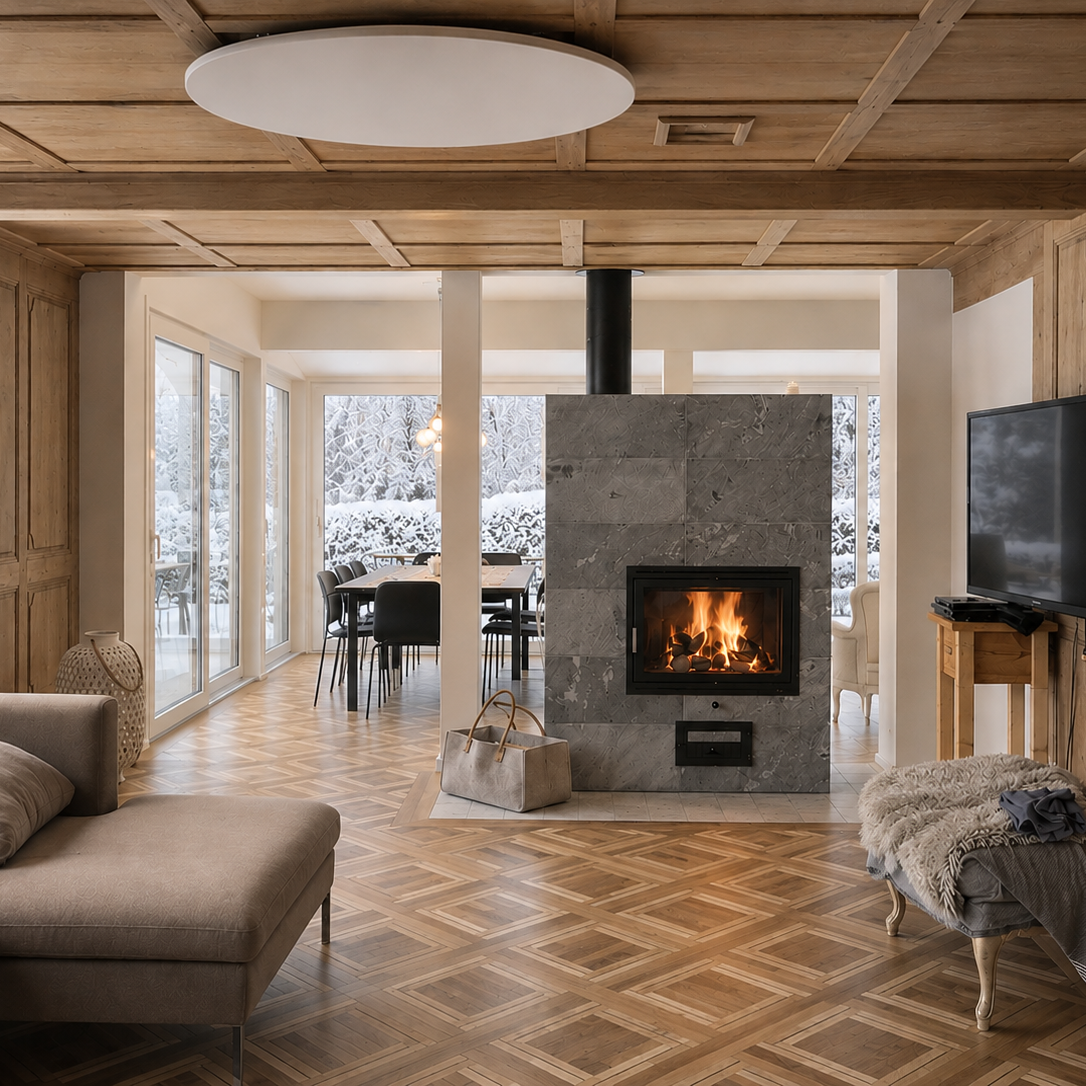
Fire for every project
The right fire feature for every architectural signature, from the minimalist visible edge to the sculptural heat storage stove. Discover our range and find what suits your room and your style.

FAQs
Does a fireplace stove or wood-burning stove need its own fresh air supply?
Yes. A fireplace stove or wood-burning stove also absolutely needs a sufficient fresh air supply, especially in modern, airtight buildings. A missing or undersized supply is the most common planning mistake.
Do I need a building permit for a fireplace or a stove?
That depends on the project and the canton. A permit is often required for a new chimney or a conversion. We clarify this for your project and submit the necessary documents in an approvable form.
Which regulations apply to fireplaces and stoves in Switzerland?
The decisive rules are the VKF fire protection regulations, the FOEN recommendations together with the Ordinance on Air Pollution Control and the technical rules of feusuisse, plus cantonal building law. The fire protection regulations of 2015 currently apply, and a complete revision (BSV 2026) is in preparation.
Does the chimney have to be inspected regularly?
Yes. Combustion systems are periodically inspected and cleaned by the chimney sweep. The intervals are regulated by the cantons.
Can I renovate my old fireplace instead of replacing it?
In many cases, yes, for example by installing a modern fireplace cassette. Under current law, such maintenance and renovation costs are in principle tax-deductible until the end of 2028. We will gladly check the options for your system.